
Trucks Built for Colorado Driving Demands
Diesel and Gas Truck Repair in Englewood for work trucks, commercial vehicles, and personal trucks handling towing and winter conditions
Colorado driving conditions impose specific mechanical stress through elevation changes that affect engine performance, towing loads that test drivetrain durability, and winter weather exposure that accelerates corrosion on brake components and suspension assemblies. Bear Country Colorado repairs both diesel and gas-powered trucks with services including diagnostics, engine repair, suspension work, brake service, and preventative maintenance designed to address wear patterns common to vehicles operating year-round across the Denver Metro area. Certified fleet-service capabilities support commercial customers managing multiple vehicles alongside personal truck owners who depend on reliable transportation for recreation and daily use.
This service addresses powertrain systems experiencing reduced efficiency from high-altitude operation, brake assemblies subjected to prolonged engagement during mountain descents, and suspension components fatigued by payload weight combined with road surface impacts. Diagnostics identify developing problems in emission control systems affected by fuel quality variations, transmission performance under towing loads, and cooling system capacity when ambient temperatures swing from summer heat to subzero winter cold.
Keep trucks road-ready with scheduled service that addresses wear before breakdowns occur during travel.
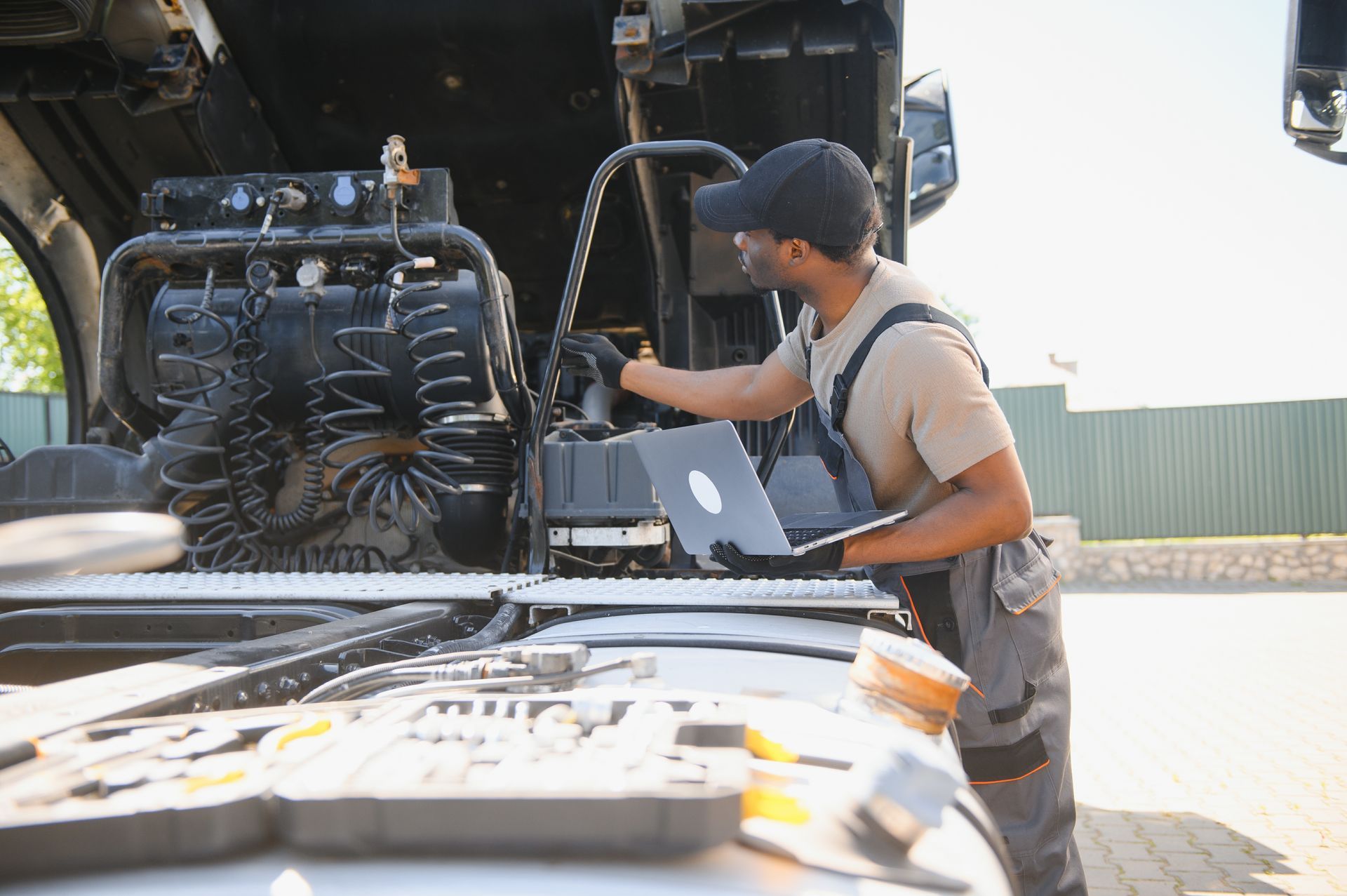
Repair work examines engine sensors that adjust fuel delivery for altitude compensation, inspects brake rotors and drums for heat-related warping from sustained mountain use, and evaluates suspension bushings and shock absorbers degraded by freeze-thaw cycles that penetrate component seals. Diesel engines receive fuel system cleaning to remove deposits that accumulate from biodiesel blends and winter fuel additives, while gas engines undergo ignition system testing to verify spark consistency at varying atmospheric pressures encountered during elevation changes across Englewood and surrounding areas.
Once service is finished, your truck accelerates smoothly without hesitation at higher elevations where oxygen density decreases, brake pedal response remains firm and consistent across repeated applications during descents, and suspension articulation absorbs impacts without harsh jarring or bottoming out when carrying cargo or towing trailers. Engine diagnostics resolve check-engine conditions caused by emission system faults that trigger under specific operating conditions unique to Colorado altitude and climate.
Maintenance includes fluid replacement at intervals accounting for severe-duty operation when towing or hauling regularly, inspection of cooling system hoses subjected to thermal stress, and verification that four-wheel-drive engagement systems function correctly for winter traction needs. Service planning prevents unexpected failures during work commitments or personal travel when truck unavailability creates significant inconvenience.
Questions Before Starting Your Project
Truck owners balancing work demands, recreational use, and daily transportation needs often ask about maintenance appropriate for Colorado conditions and repair priorities when multiple systems show wear.
What maintenance does towing duty require beyond standard service intervals?
Towing increases transmission fluid temperature, accelerates brake wear from additional mass during deceleration, and stresses drivetrain components including differential gears and axle bearings that experience elevated loads compared to unloaded vehicle operation on flat terrain.
How does winter weather affect diesel truck reliability in Englewood?
Diesel fuel gels at low temperatures without appropriate winter additives, glow plug systems must function correctly for cold starts, and fuel filter replacement becomes critical when wax crystals form in fuel lines during overnight temperature drops that occur regularly throughout winter months.
When should suspension components be inspected on work trucks?
Suspension inspection should occur when handling characteristics change, when tire wear appears uneven across the tread face, or at intervals based on payload duty rather than mileage alone, since trucks frequently loaded near capacity stress components more severely than identical mileage accumulated without cargo.
What causes brake problems on trucks used for mountain driving?
Mountain brake problems develop from rotor overheating during extended descents, brake fluid moisture absorption that lowers boiling points and causes vapor lock, and pad material transfer that creates uneven rotor surfaces producing pulsation felt through the brake pedal.
Why do check-engine lights illuminate more frequently at altitude?
Altitude affects oxygen sensor readings, evaporative emission system pressure, and engine control module fuel trim calculations, causing fault codes that may not trigger at sea level but appear repeatedly when operating above 5,000 feet elevation common throughout the Denver Metro area including Englewood.
Bear Country Colorado provides repair and diagnostics for diesel and gas trucks experiencing Colorado-specific mechanical challenges. Request an evaluation to identify service priorities based on your truck's operating conditions and current component status.